A Ray of Hope in the Ocean

Spanish version below
In the world of conservation, happy endings are rare. We usually speak about losses, threats, and species in decline. But this time, at last, we get to share a win.
The green sea turtle (Chelonia mydas) has been officially removed from the global Red List of threatened species, becoming the first —and only— sea turtle species in the world to leave it. A milestone that seemed impossible just a few decades ago.
It is a triumph built slowly and by hand: the result of thousands of protected beaches, engaged communities, fishing regulations, science, volunteers, rangers, educators, and generations of people who refused to give up.
A global success… with a footnote
Amid the celebration, an important reminder remains: today’s populations are still far below their historic numbers, and not all subpopulations have recovered at the same pace.
The Pacific subpopulation that reaches our coasts is known as the Black Sea Turtle or Tortuga Prieta, and although its numbers are rising, the IUCN still classifies it as Vulnerable.
In other words: we’re on the right path, but we’re not there yet. All sea turtle species found in Mexico are still protected under federal law.
Where restoration becomes real: the Teopa Beach Sanctuary
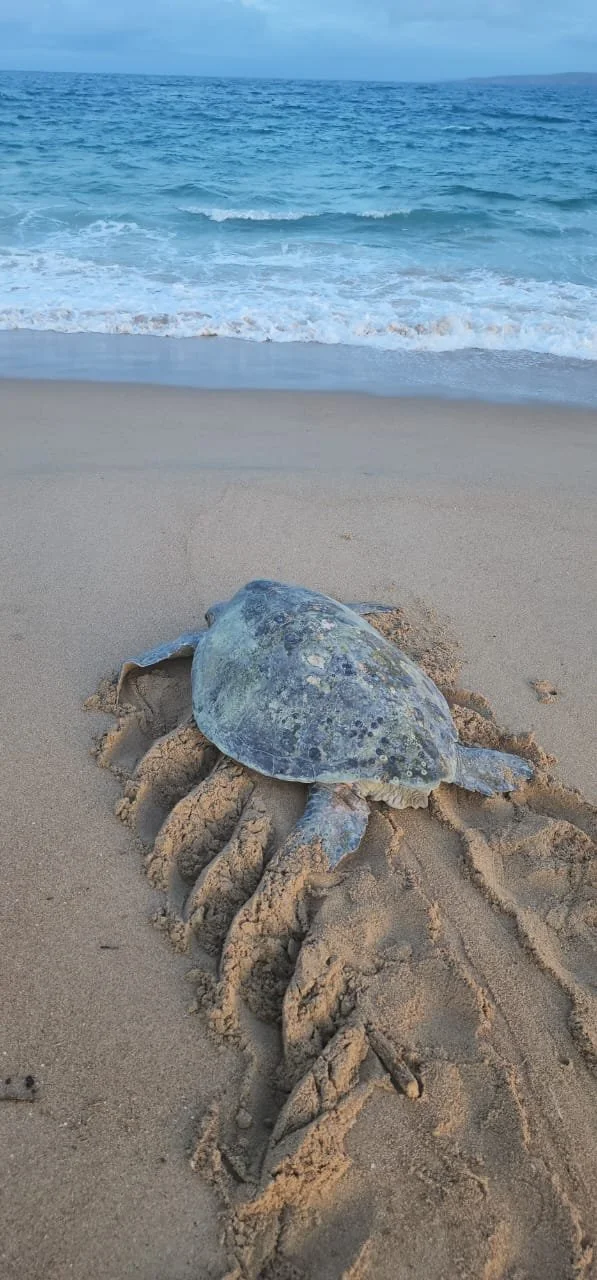
Photo by Roberto Vargas
Along this very special stretch of Mexico’s Pacific coast, the Teopa Beach Sanctuary has become a vital refuge for sea turtles.
Here, every nesting, every protected clutch, every release of hatchlings is a small miracle —and also a reminder that recovery is never guaranteed.
Our team works day and night to:
Patrol the beach and safeguard nests from depredation or poaching
Monitor nests and record scientific data
Assist hatchlings during emergence and release
Educate local communities, schools, and visitors
Connect conservation with science, culture, and responsible tourism
This year, the global news about the Green Sea Turtle finds us in the midst of our daily work: hands in the sand, eyes on the moon phases, watching for the next track on the wet beach.
Why celebrate this “win”?
Because in conservation, victories are rare. And when they happen, we must celebrate them to remember that human action can also save, not only destroy.
The recovery of the Green Sea Turtle is proof that collective efforts work.
That protecting remote beaches is worth it.
That future generations can inherit healthier oceans.
That every nest counts.
That a committed community —like Careyes and the neighboring villages— can truly make a difference.
What comes next
Today, we celebrate.
Tomorrow, we continue working.
Because the Black Sea Turtle needs us, and because its story —still being written— can also become one of the few hopeful endings the planet so desperately needs.
From the Teopa Beach Sanctuary, we will continue caring, educating, and protecting… until all turtles have a safe ocean to return to.
Spanish version
Un rayo de esperanza en el océano
En el mundo de la conservación, las historias con finales felices son escasas. Normalmente hablamos de pérdidas, de amenazas, de especies que retroceden. Pero esta vez, por fin, podemos contar un “win”.
La tortuga marina verde (Chelonia mydas) ha sido oficialmente retirada de la Lista Roja global de especies en peligro, convirtiéndose en la primera —y única— tortuga marina del mundo en salir de ella.
Un logro que parecía imposible hace apenas unas décadas.
Es un triunfo construido a pulso: la suma de miles de playas protegidas, comunidades involucradas, regulaciones de pesca, ciencia, voluntarios, guardaparques, educadores y generaciones de personas que se negaron a rendirse.
Un éxito global… pero con nota al pie
Entre tanta celebración, hay un recordatorio importante: las poblaciones actuales siguen lejos de sus números históricos de estos reptiles, y no todas las poblaciones de esta especie han logrado recuperarse al mismo ritmo.
La subpoblación del Pacífico que llega a nuestras playas es conocida como Tortuga Prieta o Tortuga Negra.
Y aunque sus números van en aumento, la IUCN todavía la clasifica como Vulnerable.
Es decir: vamos por buen camino, pero aún no hemos llegado. Todas las tortugas marinas en México siguen protegidas bajo la ley federal.
Donde la restauración se vuelve realidad: Santuario Playa Teopa
Fotografía de Roberto Vargas
En esta costa tan especial del Pacífico mexicano, el Santuario Playa Teopa se ha convertido en un refugio vital para las tortugas marinas.
Aquí, cada anidación, cada nido protegido, cada liberación de crías es un pequeño milagro —pero también un recordatorio de que la recuperación nunca está garantizada.
Nuestro equipo trabaja de día y de noche para:
Vigilar la playa y resguardar los nidos para protegerlos de la depredación o saqueo
Monitorear nidos y registrar datos científicos
Acompañar nacimientos y liberaciones
Educar a comunidades locales, escuelas y visitantes
Conectar conservación con ciencia, cultura y turismo responsable
Este año, la noticia global de la Tortuga Verde nos encuentra en pleno trabajo diario, manos en la arena, ojos en las lunas, atentos al siguiente rastro que aparece sobre la playa húmeda.
¿Por qué celebrar este “win”?
Porque en conservación, los triunfos son raros.
Y cuando ocurren, debemos celebrarlos para recordar que la acción humana puede salvar, no solo destruir.
La recuperación de la Tortuga Verde es una prueba de que los esfuerzos colectivos funcionan.
De que vale la pena proteger playas remotas.
De que las generaciones futuras pueden heredar mares más sanos.
De que cada nido cuenta.
De que una comunidad comprometida —como la de Careyes y las comunidades vecinas— puede marcar una diferencia real.
Lo que viene
Hoy celebramos.
Mañana seguimos trabajando.
Porque la Tortuga Prieta nos necesita, y porque su historia —aún en construcción— también puede convertirse en uno de esos pocos finales felices que el planeta tanto necesita.
Desde el Santuario Playa Teopa, seguiremos cuidando, educando y protegiendo… hasta que todas las tortugas tengan un océano seguro al cual regresar.